Complacency is the silent killer of market authority. In the rapidly shifting landscape of 2026, a visual identity that felt “cutting-edge” three years ago can easily signal “legacy” today. However, the most dangerous move a CEO or a Founder can make is a knee-jerk reaction to a fleeting trend.
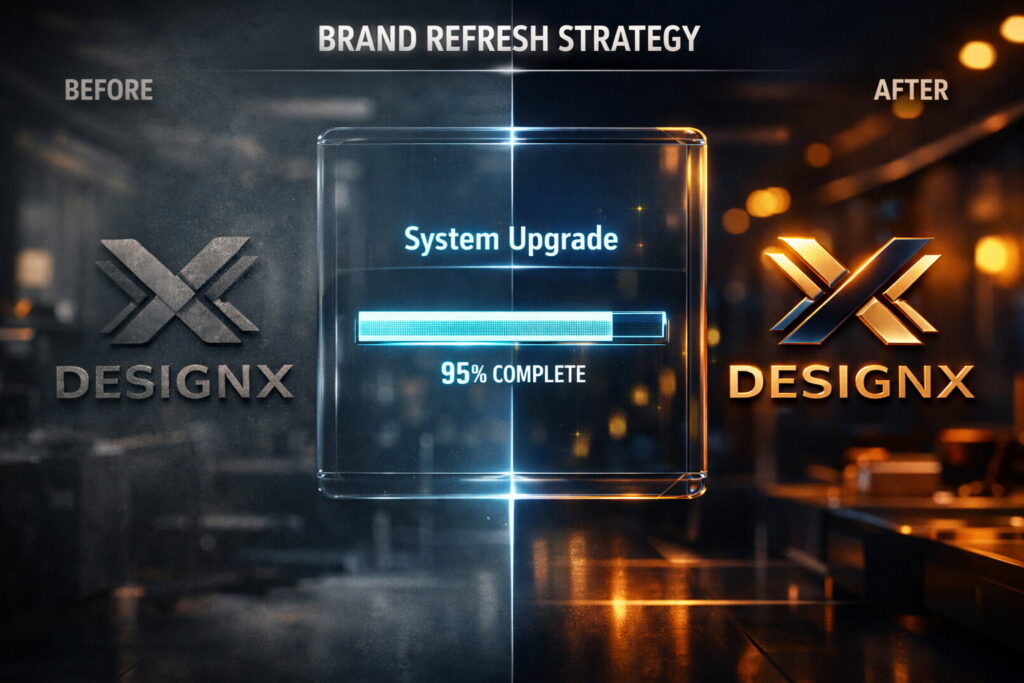
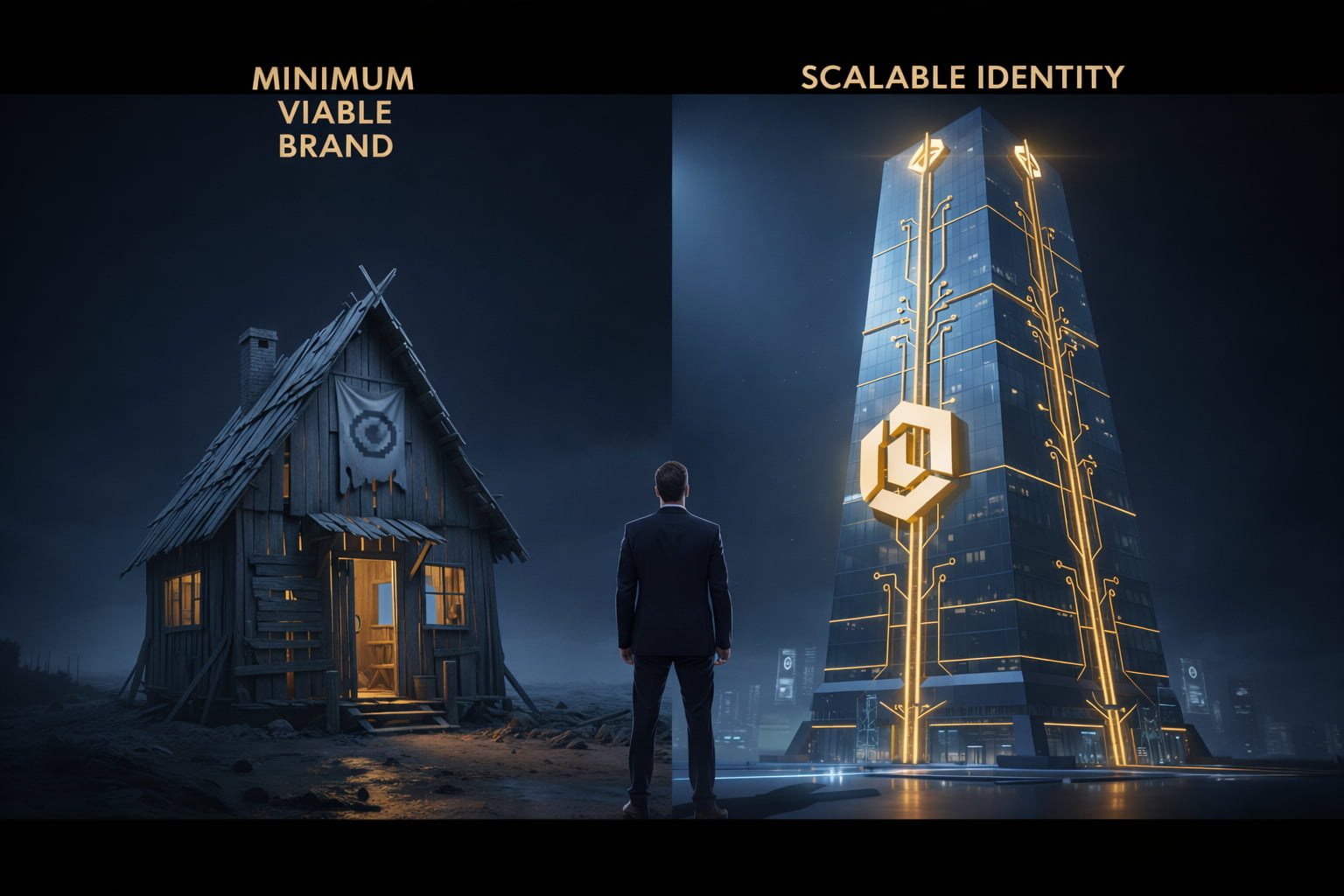
Deciding between a Brand Refresh Strategy and a total brand rebuild is a high-stakes financial decision. One preserves and amplifies your existing brand equity; the other burns the old house down to build a skyscraper. Understanding the anatomy of this transition is the difference between a successful market pivot and a catastrophic loss of customer recognition.
The Financial Logic of Brand Equity Preservation
Before touching a single pixel, we must address the “Trust Dividend.” Brand equity is the commercial value that derives from consumer perception of the brand name of a particular product, rather than from the product or service itself. When you have spent years or decades building trust, that visual shorthand—your logo, your specific shade of blue, your unique typographic rhythm—becomes a cognitive shortcut for the consumer’s brain.
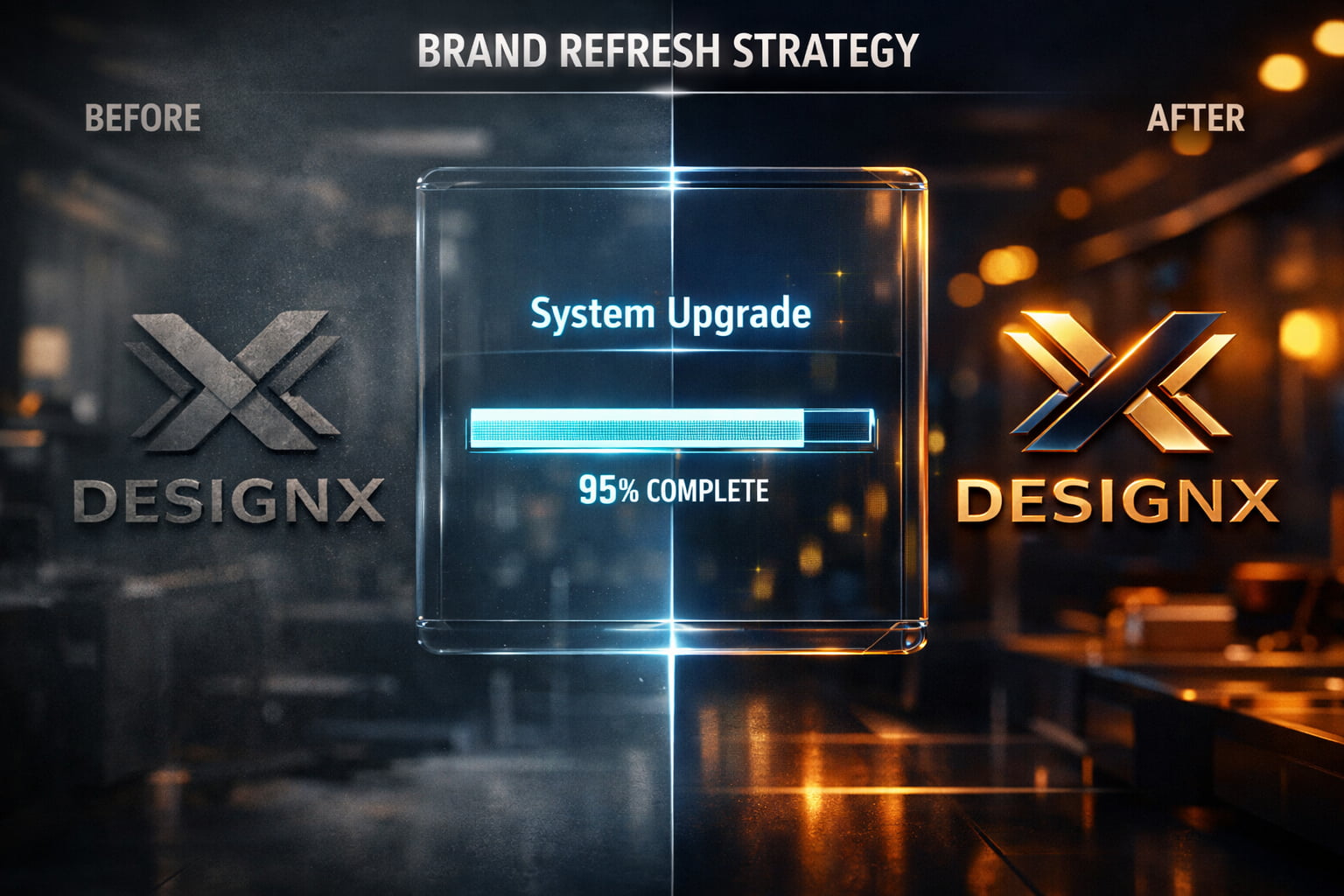
A Brand Refresh Strategy is an exercise in surgical precision. It assumes that your core values, your mission, and your market fit are still valid, but your “suit” is out of style. You aren’t changing the person; you are updating the wardrobe to reflect current status.
If you rebuild when you should have refreshed, you trigger “Recognition Friction.” Your loyal customers land on your site and, for a split second, they don’t know where they are. That millisecond of confusion is enough to spike bounce rates, lower conversion floors, and send them to a competitor who feels “familiar.” Conversely, a refresh bridges the gap between where you were and where you are going without alienating the base that funded your growth.
Brand Refresh Strategy: The Art of Tactical Evolution
A refresh is about alignment. It’s for the company that is growing but feels its current image is “lagging” behind its internal reality. You are still the same company, but you’ve matured. You’ve gone from a scrappy startup to a market contender, and your DIY logo from 2022 is now a liability.
The Four Primary Triggers for a Refresh:
- Visual Decay and “Aesthetic Debt”: Every design choice has a shelf life. What was “bold” in 2020 (like heavy drop shadows or specific gradient styles) now looks dated. Aesthetic debt accumulates when you fail to update small elements over time, eventually leading to a brand that looks neglected.
- Platform Expansion and Technical Scalability: Your logo was designed for a 13-inch laptop screen in 2019. Does it work as a 16×16 pixel favicon? Does it render clearly on an Apple Vision Pro interface? A Brand Refresh Strategy often involves “Responsive Branding”—creating versions of your logo that adapt to different digital contexts without losing identity.
- Audience Aging and Generational Shift: Your original audience has matured, and a new generation of buyers is entering the market. If your brand looks “too young” for your high-ticket services or “too old” for a Gen Z demographic, you are bleeding market share.
- Internal Fragmentation: Over the years, different departments have created “rogue” versions of the brand for internal slides, social media, or local events. A refresh brings everyone back to a unified, modern standard.
In a refresh, we keep the “DNA”—the core recognizable elements—but we optimize the execution. We might sharpen the logomark, modernize the color palette for high-density OLED screens, and introduce a more sophisticated typographic system.
Total Brand Rebuild: When the Foundation is Cracked
A rebuild (or a full Rebrand) is a radical intervention. This is not about a fresh coat of paint; it is about changing the structural blueprint of the business. This is a high-cost, high-reward maneuver that is only justified when the current brand is actively holding the business back from its financial potential.
The “Point of No Return” Indicators:
- The Strategic Pivot: You were a hardware company; now you are a SaaS provider. Your old brand doesn’t just look old; it is factually incorrect. It creates a “Cognitive Mismatch” that confuses the market.
- Negative Equity and Reputation Damage: If the current brand is associated with past failures, poor management, or a PR crisis, no amount of “refreshing” will help. You need a clean slate to rebuild trust.
- Hyper-Commoditization: You are trapped in a price war because your brand looks exactly like everyone else’s in a saturated market. A total rebuild allows you to “Zig” when the market “Zags,” creating a visual pattern interrupt that justifies a premium price point.
- M&A (Mergers and Acquisitions): When two distinct cultures merge, a “New Entity” is often required to signal a unified future rather than a hostile takeover.
A rebuild allows for a Category Exit—leaving a crowded, low-margin niche to enter a premium, high-margin category. This is where Designx excels: engineering a new identity that justifies a 300% price increase because the brand now signals an entirely different level of mastery.
Avoiding the Pitfall of Brand Dilution
One of the most significant risks in a poorly executed Brand Refresh Strategy is “Brand Dilution.” This occurs when the updates are so frequent or so inconsistent that the brand loses its “core.” If your logo changes slightly every six months because you are following TikTok trends, you are training your customers to ignore you.
Consistency is the multiplier of brand value. A refresh should happen once every 3 to 5 years, not every fiscal quarter. At Designx, we prevent dilution by creating a “Brand Core Document” that identifies which elements are permanent (The DNA) and which are flexible (The Wardrobe). This ensures that even as the brand evolves, it remains rooted in the authority you’ve already built.
The “Refresh ROI” vs. The Invisible Cost of Inaction
Many businesses view branding as an expense. This is a fundamental misunderstanding of asset management. Your brand is a tool for lead generation, talent acquisition, and price protection. If your brand feels dated, you pay a “Mediocrity Tax” in three measurable ways: (see nngroup.com)
- Inflation of Customer Acquisition Cost (CAC): Your ads have to work harder. You have to spend more on copy and “hype” to overcome the initial skepticism your “old” or “cheap” look creates.
- The Talent Gap: Top-tier talent—the 10x engineers and visionary strategists—want to work for companies that look like the future. If your brand looks like the past, you will only attract B-players.
- Severe Price Sensitivity: When a prospect perceives your brand as stagnant, they negotiate harder on price. A modern, authoritative brand signals that you are at the top of your game, which naturally silences price objections.
A strategic Brand Refresh Strategy pays for itself by shortening the sales cycle. When the brand looks “current” and “authoritative,” the prospect’s subconscious mind stops looking for reasons not to trust you and starts looking for ways to work with you.
The Designx Execution Framework: DNA to Deployment
We do not believe in “guessing.” Our framework for a Brand Refresh Strategy is rooted in data and technical precision.
Step 1: The Visual Audit and Equity Mapping
We analyze every touchpoint—from your website to your invoice templates and ProPresenter slides. We map out what your customers recognize. If they recognize your “Gold” color but hate your “Serif” font, we know exactly what to keep and what to kill.
2. Typographic and Color Engineering
We don’t just “pick” colors. We engineer palettes that pass AA/AAA accessibility standards and look vibrant on everything from a smartphone to a billboard. We select typefaces that optimize legibility, reducing the “cognitive load” on your users.
3. Workflow Systemization and AI-Readiness
A refresh is the perfect time to automate. We provide your team with a “Digital Brand System” (not just a PDF style guide). We integrate your brand assets into AI-assisted workflows, ensuring that every piece of content your team generates is 100% on-brand without needing a senior designer’s manual approval every time.
4. The “New Era” Rollout
A brand refresh shouldn’t be a secret. It’s a massive marketing opportunity. We help you use the update to re-engage past clients, signal growth to the market, and reset the conversation about your pricing and value proposition.
Strategic Identity vs. Aesthetic Ornamentation
As I’ve stated before, we don’t do “decoration.” If you want a “pretty logo,” hire a freelancer. If you want a Brand Refresh Strategy that functions as a financial lever, you hire a partner who understands the intersection of design, psychology, and business growth.
A refresh must be rooted in competitive positioning. We look at your competitors’ visual “signatures.” If the entire industry is using “Safe Blue” and “Sans-Serif Fonts,” we might propose a “Deep Obsidian” and “Industrial Slab” to create a visual pattern interrupt. The goal is to make your brand the most “visible” signal in an increasingly noisy room.
Conclusion: Evolve or Fade into the Noise
The market does not stay still. Your customers are being bombarded with world-class design from every direction—from the apps they use to the coffee they buy. If your visual identity hasn’t moved in years, you aren’t being “consistent” you are receding.
The decision to refresh is an act of leadership. It signals to your team, your clients, and your competitors that you are still in the game, you are still innovating, and you are still the authority. Whether you need a surgical refresh to sharpen your edge or a total rebuild to claim a new territory, the cost of waiting is always higher than the cost of action.
Is your brand an asset or a liability? Book a Brand Audit Strategy Session with Designx. Let’s determine if it’s time to sharpen the blade or forge a new one.