The most expensive line item on your balance sheet isn’t your payroll, your software stack, or your taxes. It is the revenue you bleed every single day because your visual identity signals “amateur” to a market that buys “expert.”
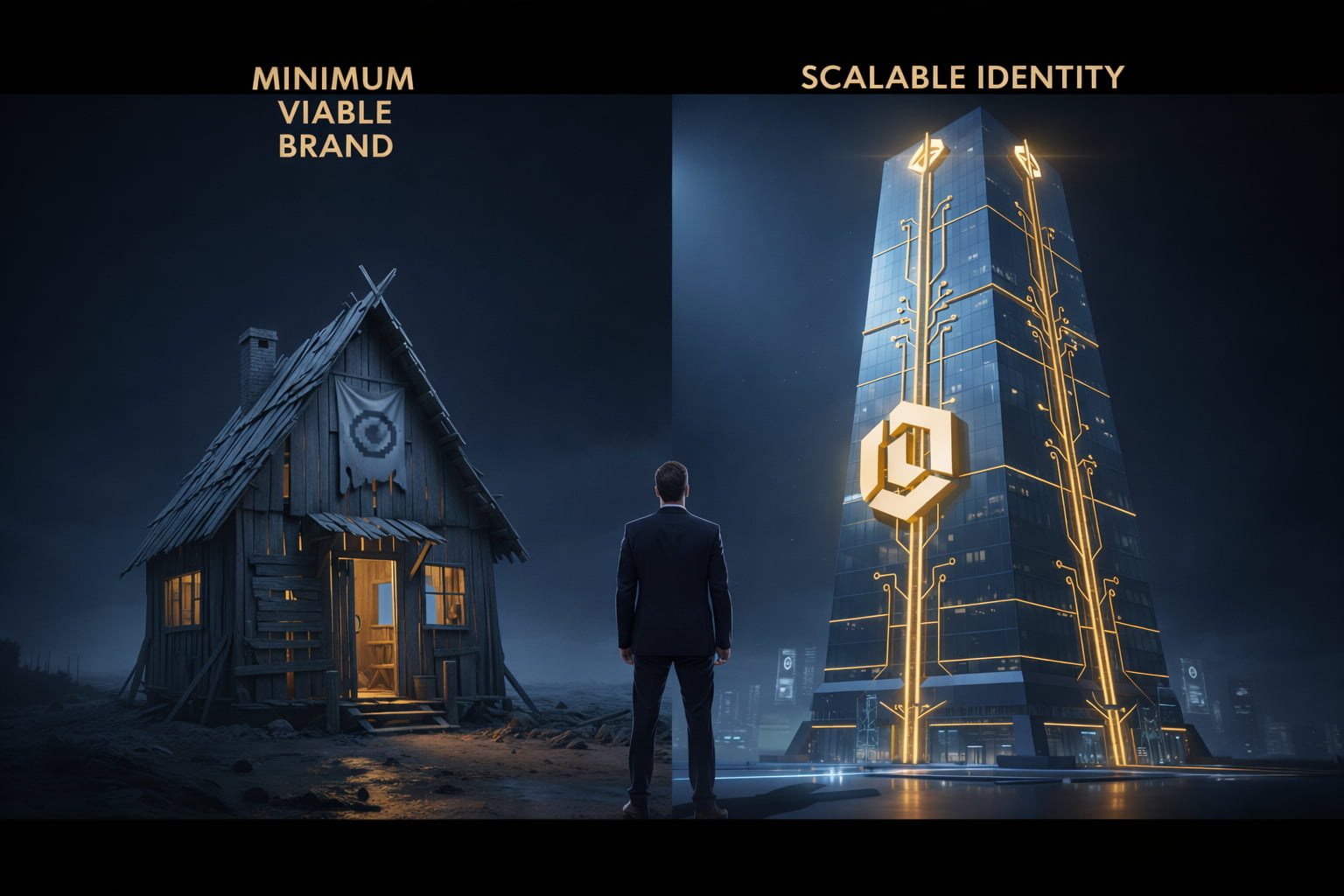
There is a pervasive lie in the startup and SME world that branding is a “Phase 2” problem a luxury reserved for when cash flow is abundant. This is backward logic. It is financial suicide. Analyzing the Premium Branding ROI (Return on Investment) reveals a stark truth: Market leaders do not invest in branding because they have excess capital; they have excess capital because they invested in branding.
When you treat design as aesthetic ornamentation rather than a strategic financial lever, you are voluntarily entering a race to the bottom. You are telling your prospective clients, “Compare me on price.” Conversely, a strategic visual identity acts as a repulsive force against low-quality leads and a magnet for high-ticket retainers.
This article dissects the Premium Branding ROI, stripping away the artistic sentiment to reveal the cold, hard mechanics of brand equity.
The Psychology of Value: Why The Brain Craves Structure
To understand the financial return on branding, we must first understand the biological hardware of your customer. The human brain is a cognitive miser. It is evolutionarily wired to conserve energy. When a prospect lands on your website or views your pitch deck, they do not read. They scan. They engage in what Nobel laureate Daniel Kahneman calls “System 1” thinking fast, instinctive, and emotional.
In less than 50 milliseconds before a single word of your carefully crafted copy is read the user has already made a subconscious judgment about your competence. This is the “Halo Effect.” If the visual cues (typography, spacing, color theory, imagery) signal “high status,” the brain assumes your product or service is also high-quality. If the visuals are disjointed, the brain triggers a risk aversion response.
This creates a massive barrier to entry for sales. If your visual identity is weak, your sales team has to work twice as hard to prove you are capable. You are starting the negotiation from a deficit. Premium Branding ROI is realized the moment you stop fighting your customer’s subconscious and start leveraging it. By aligning your visual cues with the expectations of a premium market, you bypass the initial “trust filter.”
Furthermore, this psychological anchoring is persistent. Once a prospect categorizes you as “budget,” it is nearly impossible to move them to “premium.” You are fighting their confirmation bias. A premium identity sets the anchor high from the first pixel.
Premium Branding ROI and The Price Floor
The most tangible metric of brand equity is pricing power. In the absence of a strong brand, you are a commodity. Commodities are priced based on the cost of production plus a marginal markup. Service providers without strong brands are forced to charge based on hours worked. This is a trap.
Strategic branding creates a “Price Floor.” It elevates the baseline perception of your value. Consider the difference between a freelance graphic designer on a freelancer marketplace and a specialized agency like Designx. Both might deliver a logo. But the agency with a cohesive, polished, and authoritative brand identity commands a fee 10x to 50x higher. Why? Because the brand promises a result, not just a task.
When you invest in a premium identity, you are buying the right to decouple your revenue from your time. You are signaling that the value you provide is intellectual and strategic, not just manual labor. A premium brand suggests that you have a process, a methodology, and a guarantee of quality that a generic competitor lacks.
The math is simple. If a rebrand allows you to move from “Cost-Plus” pricing to “Value-Based” pricing, your margins explode. A 20% increase in perceived value often allows for a 50% increase in profit margin, as your delivery costs remain static while your revenue scales. This is the core of Premium Branding ROI: getting paid for who you are, not just what you do.
Reducing Sales Friction: The Trust Dividend
Sales friction is the resistance a prospect feels before signing the contract. It is the hesitation, the request for “one more reference,” the need to “think it over.” A significant portion of this friction stems from a lack of confidence in the vendor’s stability.
A robust brand identity pays a “Trust Dividend.” It does the heavy lifting before the first meeting even starts. When a prospect interacts with a brand that is consistent across all touchpoints, they subconsciously register the company as stable, established, and safe.
The Trust Signals Checklist
Your brand is either building trust or eroding it. To maximize your Premium Branding ROI, ensure you are firing these specific signals:
- The “Invoice Test”: Does your invoice look like it came from a Fortune 500 company, or a default QuickBooks template? High-ticket clients expect high-ticket documentation.
- The Typography Hierarchy: Amateur brands use too many fonts or inconsistent sizes. A premium brand uses type to guide the eye with surgical precision, signaling a disciplined internal culture.
- Custom Imagery: Stock photos scream “generic.” Custom, art-directed imagery signals that you have the resources and pride to create your own assets.
- The “Squircle” Consistency: Attention to detail—like using consistent corner radii (squircles) on buttons and cards—signals to a technical buyer that you care about the microscopic details.
When these signals are aligned, the sales cycle shortens. You spend less time convincing them you are “real” and more time scoping the project.
Strategic Identity vs. Aesthetic Ornamentation
A fatal error many businesses make is confusing “branding” with “decoration.” They hire an illustrator to make something “cool” or “modern” without a root strategy. This is vanity, not investment.
Strategic visual identity is engineering, not art. It is the process of translating business objectives into visual language. At Designx, we do not simply choose colors because they are pleasing; we select palettes that differentiate a client from their competitors on a matrix of market positioning.
For example, a cybersecurity firm needs to convey rigidity, impenetrability, and precision. A monospaced font and a high-contrast, dark-mode palette achieve this. A wellness brand needs to convey organic growth and calm; this requires fluid shapes and softer, natural tones. If the cybersecurity firm uses the wellness palette, they don’t look “friendly”, they look vulnerable.
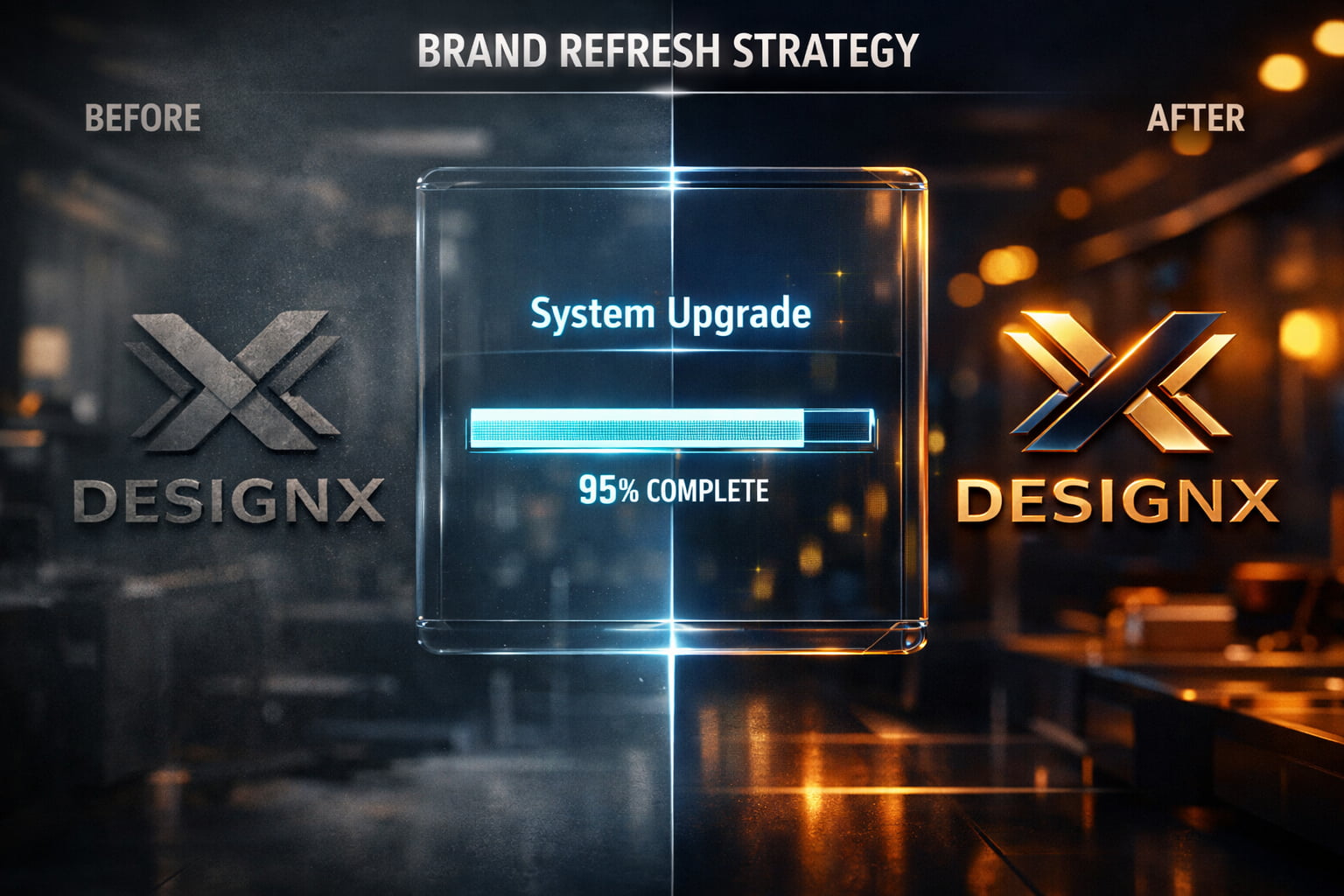
When you treat design as ornamentation, you get a logo. When you treat it as strategy, you get a market position. The former is an expense; the latter generates significant Premium Branding ROI.
The Long-term Multiplier of Premium Branding ROI
Finally, we must look at branding through the lens of compound interest. A “cheap” logo or a template-based website is a depreciating asset. It works (barely) for six months, then begins to look dated, eventually becoming a liability that actively hurts your conversion rate. You will pay to replace it, and then pay to replace it again. This is the “poverty tax” of bad design. It is expensive to be cheap.
A premium brand system is an appreciating asset. It is built on timeless design principles rather than fleeting trends. As you execute projects, publish content, and gather testimonials under this unified banner, the brand accrues equity. The logo becomes a symbol of your track record.
Over three to five years, this accumulation of brand equity allows you to launch new products or services with zero friction. You do not have to build trust from scratch; you borrow it from the brand you have already built.
Consider the “Apple Tax.” Apple can enter a completely new market (like credit cards or streaming) and instantly capture market share. They are not selling the features of the card; they are leveraging the equity of the Apple brand. While you may not be Apple, the principle of Premium Branding ROI remains the same: a strong brand lowers the customer acquisition cost (CAC) for every subsequent product you launch.
Harvard Business Review on Brand Equity
Conclusion
The market is binary. You are either a distinct signal or you are noise. You are either a premium partner or a commoditized vendor. The difference is rarely the quality of the code or the product—it is the quality of the story you tell through your visual identity.
Refusing to invest in branding is not “saving money.” It is capping your growth. To achieve the Premium Branding ROI that shifts market position and multiplies revenue, you must stop budgeting for a logo and start investing in a legacy.
Ready to stop competing on price and start dominating on value? Book a strategy session with Designx. Let’s build the visual infrastructure your ambition deserves.